Performance Monitoring Report of the EaSI strand of the ESF+ for 2021-2023
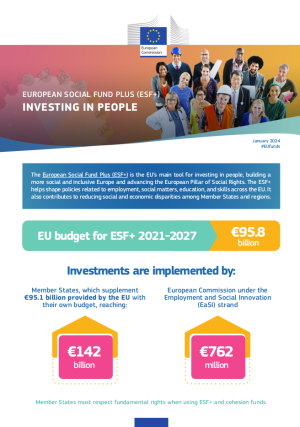
This report evaluates the performance of the Employment and Social Innovation (EaSI) strand of the European Social Fund Plus (ESF+) during the period 2021–2023.

This report evaluates the performance of the Employment and Social Innovation (EaSI) strand of the European Social Fund Plus (ESF+) during the period 2021–2023.
This staff working document presents the main findings of the ex-post evaluation of the Fund for European Aid to the Most Deprived (FEAD) for the 2014–2020 period.

This report applies the “3S Framework” (Start, Scale, Sustain) to analyse the main existing levers and policy orientations to further support social innovation in ESF programming periods beyond 2027.
This non-paper presents the perspectives of experts from the ESF+ Evaluation Partnership, a network of national coordination bodies and managing authorities from all 27 EU Member States.
The current non-paper is informed by discussions among Member State members of the ESF+ Evaluation Partnership and is an expert opinion not binding on the Member States or the European Commission.

This publication presents the ESF+ Committee's opinion on the future of the European Social Fund (ESF) post-2027.

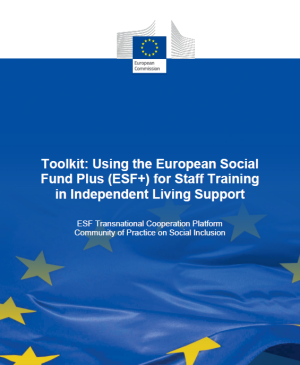
This toolkit offers guidance on using the European Social Fund Plus (ESF+) to train care workers supporting independent living for persons with disabilities and those with long-term care needs.


This handbook provides comprehensive guidance on setting up and implementing financial instruments under the European Social Fund Plus (ESF+) to support employment, education and social inclusion.

The Fund for European Aid to the Most Deprived (FEAD) addresses the most severe forms of poverty in the EU through food aid, material support and vouchers. It helps Member States progress towards achieving the EU’s 2030 headline target for poverty reduction.